Preventive HVAC Maintenance vs. Emergency Repairs: Cost Comparison
The real cost of an HVAC system is not just the sticker price on the equipment. It is the money you spend keeping it running, the comfort you lose when it fails, and the damage that spreads when a small issue goes unchecked. I have seen homeowners focus on the obvious number, the repair quote or the maintenance invoice, while missing the larger financial picture entirely. A well-timed tune-up can feel like an unnecessary expense right up until the afternoon the system quits, the house climbs into the high 80s, and the emergency service call comes with after-hours pricing attached.
That is especially true in Central Florida, where cooling systems do heavy lifting for most of the year. If you live here, preventive HVAC maintenance is not a luxury add-on. It is part of owning a home in a climate that punishes neglected equipment. Whether you are comparing routine service to an unexpected breakdown or trying to decide how often to schedule Florida AC maintenance, the cost difference is usually larger than people expect.
What preventive maintenance actually buys you
Preventive HVAC maintenance is not just a technician “checking things out.” Done properly, it is a deliberate inspection and cleaning process that looks for wear, airflow problems, refrigerant issues, electrical stress, drainage trouble, and weak components before they trigger a failure. The value of that visit is partly obvious and partly hidden.
The obvious value is that the system tends to run better after it is serviced. Filters get replaced, coils get cleaned, drain lines get cleared, and loose connections are tightened. Air moves more freely, the equipment does not work as hard, and the thermostat reaches temperature with less strain. The hidden value is even more important. A trained technician can often spot a capacitor that is starting to weaken, a blower motor that is drawing too much current, or a refrigerant leak that would have led to a bigger failure later.
That is why homeowners asking why HVAC maintenance is important are usually asking the wrong question in a way. The better question is what you want to spend money on, a predictable service visit or a chain reaction of avoidable damage. Once a system starts failing under stress, the bill rarely stays small.
Emergency repairs are expensive for reasons people overlook
Emergency HVAC repairs are not expensive only because they happen at the worst possible time. They cost more because the conditions around the repair are worse. The house is hotter, the system may be completely down, the tenant or family is uncomfortable, and the technician has to diagnose an active failure instead of a routine condition.
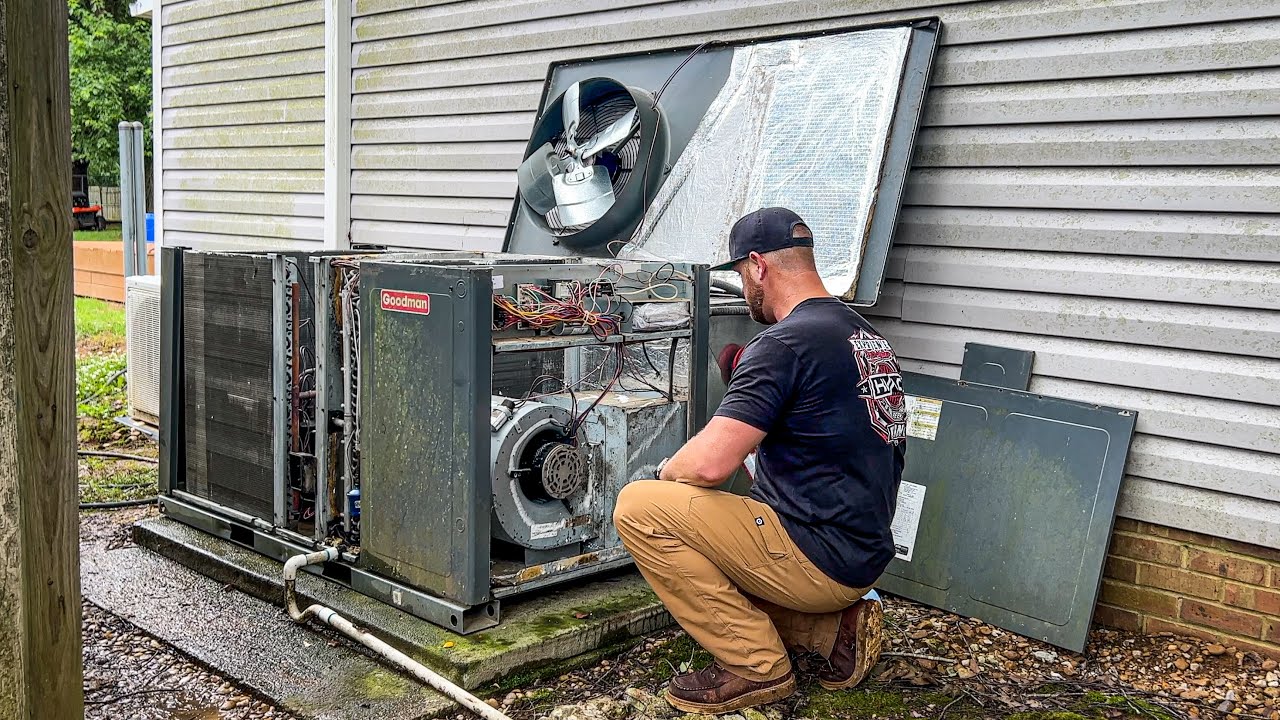
After-hours dispatches, weekend calls, and holiday visits often carry additional service fees. Even when the labor rate is reasonable, the urgency changes everything. If a component has already failed, there may be less opportunity to repair the part and more need to replace it. A failed capacitor might be a modest repair in a maintenance setting, but once it takes down a compressor or repeatedly trips the breaker, the story changes quickly.
Then there is the secondary damage. A clogged drain line can overflow and stain drywall or damage flooring. A struggling blower motor can overheat and take out other electrical components. A dirty coil can push the system into icing conditions, which can cause thawing water problems or poor cooling for days before anyone realizes the pattern. The repair invoice is one number. The real bill may include cleanup, longer labor time, replacement parts, and in some cases damage to the home itself.
The cost comparison, seen the way it usually plays out
Routine maintenance is usually a planned, lower-cost event. Emergency repair is usually a surprise, and surprise is expensive.
A typical maintenance visit might cost a few hundred dollars, depending on the market, the system type, and whether it is part of a service agreement. Some companies package inspections and tune-ups at a lower annual rate. Even when a homeowner pays separately for spring and fall visits, the total annual cost often remains modest compared with the price of a major repair.
Emergency repairs vary more widely. A simple fix after hours might still land in the several-hundred-dollar range once dispatch and labor are included. If a major part has failed, the number can rise into the high hundreds or more. Compressor-related repairs, motor replacements, coil problems, and refrigerant issues can move quickly into territory where homeowners start asking whether repair still makes sense or if replacement is the better investment.
The comparison becomes clearer when you spread costs over time. Spending a predictable amount each year on preventive HVAC maintenance can reduce the chance that one neglected issue becomes a large repair. I have seen homeowners pay for one emergency call that effectively covered several years of maintenance visits. That does not mean maintenance guarantees a perfect system, but it changes the odds in your favor. And in this business, better odds are worth real money.
Why Florida systems need a different level of attention
Florida AC maintenance deserves its own conversation because the climate is hard on equipment in a very specific way. Air conditioners in Winter Haven and across the state run for long stretches, then face humidity that creates extra condensation, mold risk, and drain line issues. Salt air is a factor closer to the coast, but even inland systems face long cooling seasons and heavy moisture loads.
That means a neglected system may not fail in the dramatic, dramatic way people imagine. It often degrades slowly. Cooling becomes uneven. Humidity rises indoors. The unit runs longer than it used to. The electric bill creeps up. Someone in the house starts lowering the thermostat another degree or two because “it just does not feel as cool as it used to.”
By the time a homeowner calls for help, the system has often been working inefficiently for months. In that sense, HVAC maintenance Winter Haven FL homeowners schedule regularly is not just about preventing failure. It is about avoiding the slow financial leak that happens when the unit loses efficiency and nobody notices until the utility bills add up.
The math behind efficiency, without pretending it is exact
There is a reason maintenance people talk about efficiency so much. Dust on coils, airflow restrictions, and low refrigerant can all make a system work harder to produce the same result. That extra work shows up as energy use. It also shows up as wear.
It is hard to assign one universal savings number because every home is different. House size, insulation quality, duct condition, thermostat habits, and system age all affect the outcome. Still, the principle is simple. If a system runs more efficiently after cleaning and adjustment, it typically consumes less energy than a neglected one. Over a long cooling season, even a modest improvement can offset a meaningful portion of the maintenance cost.
There is another side to the equation as well. An efficient unit tends to cycle in healthier patterns, which can reduce stress on compressors, contactors, capacitors, and motors. That does not eliminate wear, but it slows the rate at which parts age. Preventive maintenance is not just about saving on the current bill. It is about pushing replacement further into the future.
When homeowners skip maintenance, the same failures keep showing up
There are certain repair calls that almost always trace back to skipped maintenance. Clogged condensate drains are a classic example. In humid climates, that drain line works hard. If it clogs, water backs up and the system may shut down or leak into the home.
Dirty coils are another. When indoor or outdoor coils become coated with dust and grime, heat transfer suffers. The system has to run longer, which raises wear and often creates cooling complaints that sound like a major failure but begin as a cleaning problem.
Electrical components also take a beating over time. Capacitors, contactors, and relays do not last forever, but they often give warning signs. A maintenance visit may catch a bulging capacitor or a contactor with visible pitting before the part fails on a 95-degree afternoon. Without that visit, the homeowner gets a dead system and a bigger bill.
Refrigerant issues can be even more costly when left alone. A small leak is not just a topping-off problem. It can indicate vibration, corrosion, or a poor connection. If the leak persists, the system loses capacity, runs longer, and may suffer compressor damage. That repair is a very different financial conversation from a routine service call.
The hidden cost of waiting until the system fails completely
People tend to think of repair costs in terms of parts and labor, but failure creates practical costs that are easy to ignore until they happen. A home without cooling in Florida is not just uncomfortable. It can interrupt sleep, make remote work miserable, and create health concerns for older adults, children, or anyone sensitive to heat.
If the system fails during a heat wave, a homeowner may feel forced to approve a repair without much time to compare options. That urgency can lead to rushed decisions. Sometimes the right answer is repair. Sometimes replacement is smarter. But it is far better to make that decision during a maintenance conversation, when the equipment is still operating and there is room to plan.
There is also the matter of parts availability. Some emergency repairs require a special-order part, which means the house may be warm for a day or more. If the failure is severe, portable cooling or temporary accommodations may enter the picture. Those costs do not appear on the HVAC invoice, but they are still part of the emergency repair reality.
Maintenance does not eliminate repairs, it changes their size and timing
This is where a little honesty matters. Preventive maintenance is not magic. Equipment still ages. Parts still fail. Storms happen. Power surges happen. Compressors wear out. Even a well-maintained system may need a major repair at some point.
The difference is that maintenance often turns a sudden catastrophe into a manageable service issue. A worn capacitor replaced early may cost far less than the same failure after it has stressed other components. A dirty coil cleaned in spring may help avoid mid-summer strain that leads to a bigger breakdown. A drainage problem caught early may avoid water damage. The goal is not to promise zero repairs. The goal is to keep repairs smaller, less frequent, and less disruptive.
That trade-off matters because some homeowners view service plans skeptically. They do the math on one year and see the maintenance fee as an extra line item. But the real comparison is not one maintenance visit versus one repair. It is years of steady care versus one or two large bills that arrive at the worst possible moment.
A practical way to think about return on maintenance
A useful way to judge preventive HVAC maintenance is to ask three questions.
First, what would a breakdown cost you in direct service fees, parts, and labor? Second, what might it cost in lost comfort, time, and household disruption? Third, how much wear could be reduced or delayed by basic upkeep?
Those answers will vary, but they usually point in the same direction. Routine maintenance is the lower-risk financial choice. It offers more predictability and usually improves day-to-day performance. Emergency repairs are inherently more expensive because they combine urgency with failure. You are paying for someone to solve a problem that has already gotten ahead of you.
For homeowners in humid climates, the return is often strongest when maintenance includes cleaning coils, checking refrigerant levels, clearing drains, testing electrical components, and making sure airflow is healthy. Those are the areas where small problems turn into large ones.
What a good maintenance visit should include
A solid service appointment is more than a quick glance at the thermostat. If a technician is thorough, the visit should address the core parts of system https://icecoolinghvac.com/why-winter-haven-fl-homes-need-regular-hvac-maintenance/ health and not just the visible dust.
The most useful maintenance typically covers these areas: inspection of electrical connections and components, check of refrigerant levels and signs of leaks, cleaning of coils and drain components, testing of airflow and thermostat performance, and a general review of wear on belts, motors, and moving parts.
That said, a maintenance visit should also come with judgment. Not every system needs the exact same service at the exact same time. A newer unit in good shape may only need a standard tune-up. An older system with chronic drain issues or hard-running compressors may need closer attention. Good technicians do not just go through motions. They notice patterns, compare current performance to past visits, and tell you when a problem is developing rather than waiting for failure.
The homeowner’s real decision is predictability versus surprise
The financial comparison between preventive HVAC maintenance and emergency repairs is really a comparison between control and uncertainty. Maintenance gives you a scheduled expense, a chance to catch weak parts, and a better chance of preserving efficiency. Emergency repair gives you urgency, a wider price range, and a higher likelihood of inconvenience.
For most families, the smartest move is not to gamble that the system will hold together until it becomes convenient to fix. It is to budget for upkeep the same way you budget for tires, roof checks, or oil changes. No one enjoys spending money on maintenance. But the cost of ignoring a system that runs most of the year in Florida is usually higher, and the timing is worse.
If you are weighing whether to book service now or wait until something seems wrong, experience says to book now. The system will often tell you when it is tired, but not always in a way that is obvious. And once it stops cooling on a hot afternoon, the conversation changes from prevention to damage control very quickly.
Preventive HVAC maintenance is the cheaper habit over time, especially in a climate that asks a great deal from cooling equipment. Emergency repairs will always happen sometimes, but they do not have to be the default outcome. The more consistently a system is serviced, the less likely it is to turn a small defect into a large bill. That is the part of the cost comparison that matters most, and it is the part homeowners usually remember only after the first miserable breakdown.
Phone:
(863) 247-0271
Website:
icecoolinghvac.com
Indoor Climate Experts
296 Lake Smart Circle,
Winter Haven,
FL
33881